Spray foam is the most powerful insulation option available — and the most expensive. Used in the right places it solves problems nothing else can; used everywhere, it’s a waste of money. So the useful question isn’t “should I get spray foam?” It’s “where does my home actually need it, and where does something cheaper do the same job?”
This is the complete GTA guide: the two types, where each belongs, where foam beats blown-in and where it doesn’t, and the safety rules that matter. Whatever part of the Greater Toronto Area you’re in, here’s how to spend on foam wisely.
What spray foam is (and how it differs from blown-in)
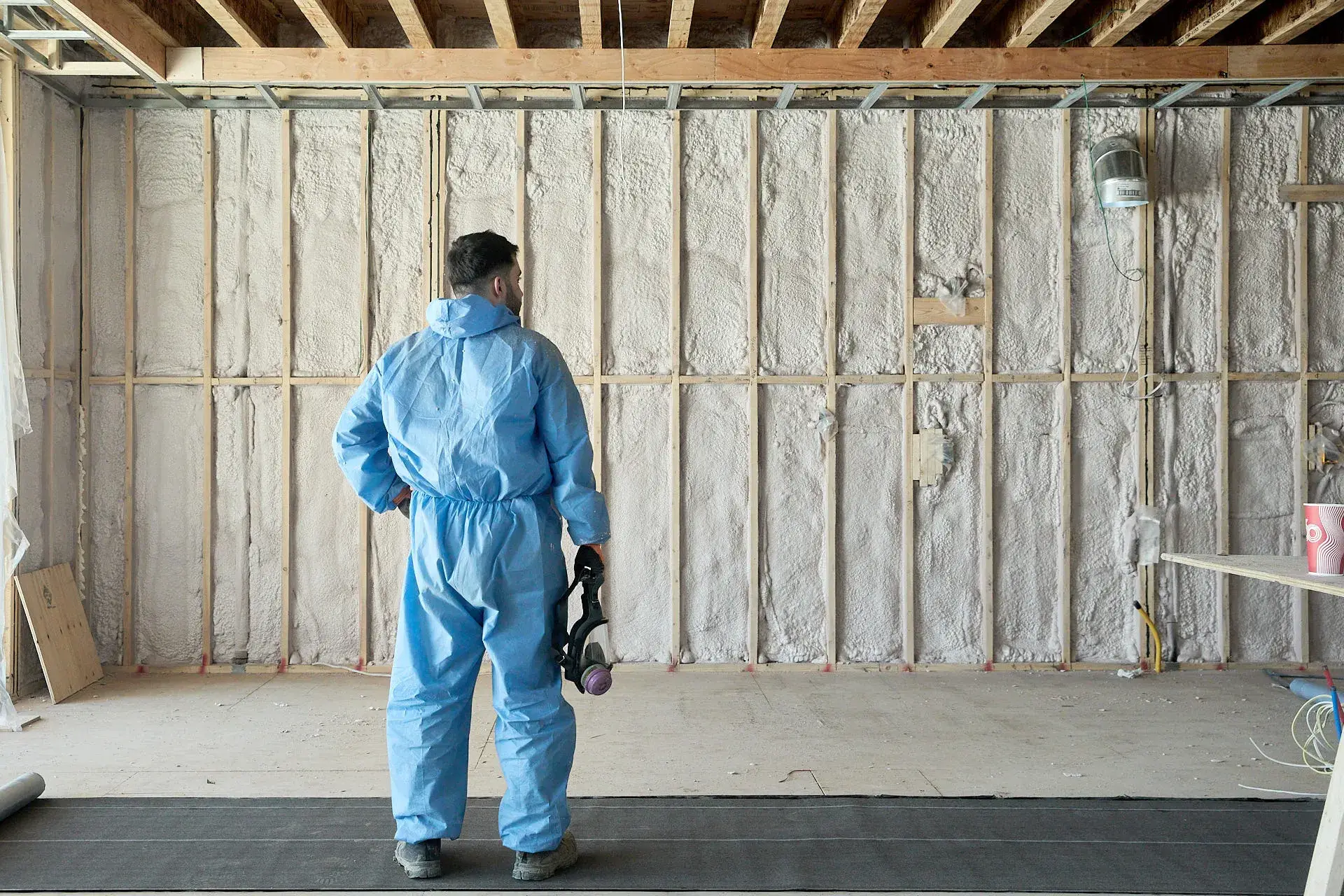
Two liquid components mix at the spray gun and expand on contact, hardening into a solid layer that both insulates and air-seals — it stops air movement, not just heat conduction. That’s the key difference from blown-in insulation, which slows heat but doesn’t seal air leaks.
That air-seal-plus-insulate combination is why foam is the right tool for specific assemblies — and why it’s overkill for an open attic floor, where cheaper blown-in reaches the same R-value.
Open-cell vs. closed-cell — the two types
| ½ lb open-cell | 2 lb closed-cell | |
|---|---|---|
| Approx. R per inch | ~R-3.5 – R-3.8 | ~R-6.0 – R-7.0 |
| Density | Light, flexible | Dense, rigid |
| Own vapour barrier? | No | Yes, at sufficient thickness |
| Moisture | Absorbs | Resists |
| Typical use | Interior walls, sound dampening, air sealing | Basements, crawlspaces, rim joists, cold floors, shallow/cathedral roofs |
| Relative cost | Lower | Higher |
½ lb open-cell → · 2 lb closed-cell →
Short version: closed-cell is the workhorse for anything below grade, near moisture, or space-constrained. Open-cell is for interior walls and sound. Most GTA homes that need foam need closed-cell.
Where spray foam is worth it
These are the assemblies where foam earns its premium — because it seals and insulates at once, and handles moisture and irregular surfaces:
Basements (foundation walls). A concrete foundation is cold and passes moisture. Closed-cell foam sprayed on it seals, insulates, and acts as its own moisture barrier — the durable way to make a basement warm and dry, especially before finishing it. Framing batts against bare concrete risks mould behind the drywall. Vapour barrier →
Rim joists. The band of framing at the top of the foundation is a continuous air leak around the whole house. Closed-cell seals and insulates it in one pass — cheap, high-impact.
Crawlspaces. Cold, often damp, frequently vented to the outside. Closed-cell (as part of a proper system — vapour barrier, wall foam, rim joist) turns a crawlspace into a sealed, conditioned space and warms the floor above.
Cold floors over unheated space. Rooms over garages, porches, or additions on piers — closed-cell seals and insulates the floor structure.
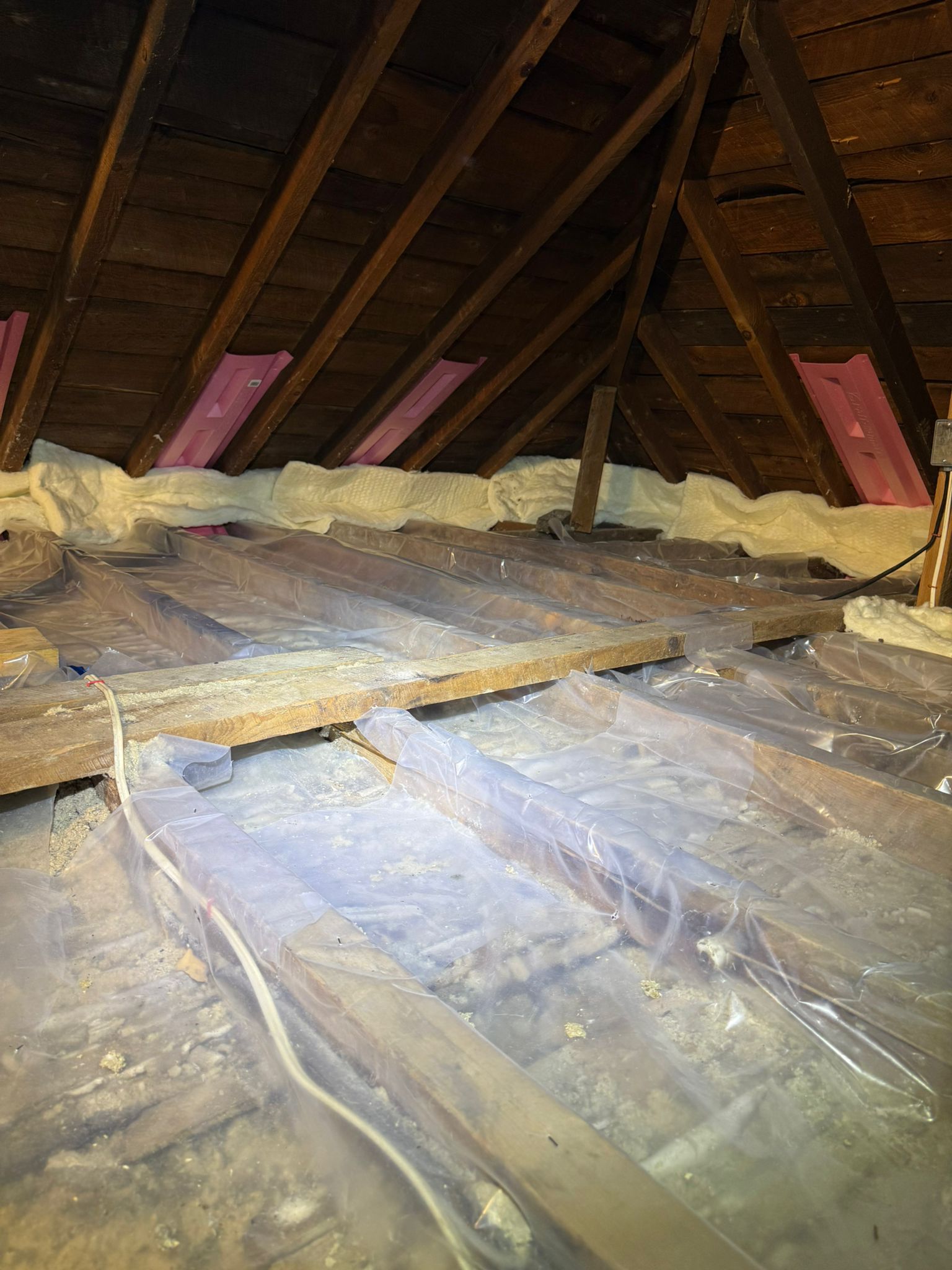
Cathedral and shallow roofs. Where there’s little cavity depth, closed-cell’s high R-per-inch delivers real performance where nothing else fits.
Where spray foam is NOT worth it
Being straight, because this is where people overspend:
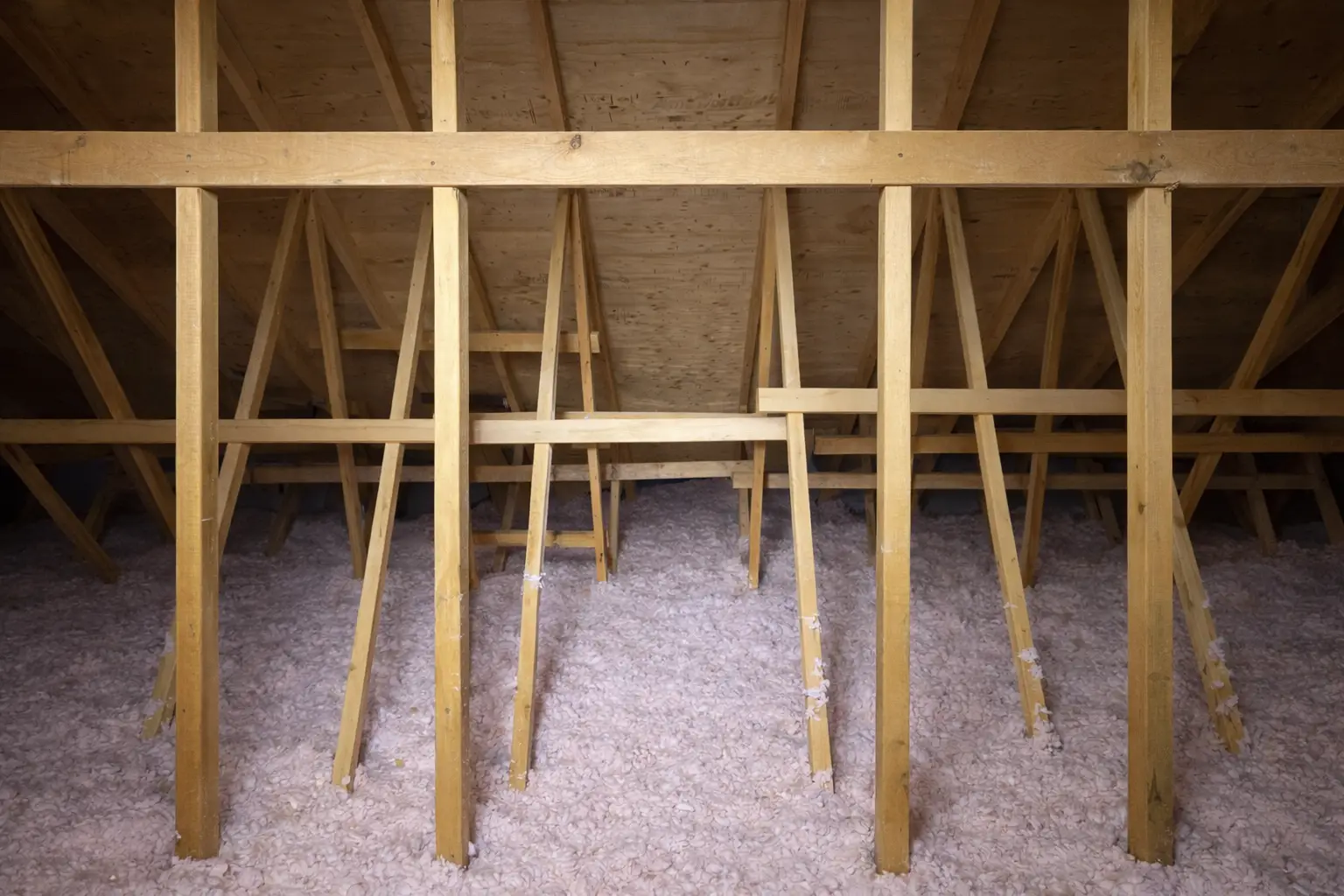
Your open attic floor. A standard attic with headroom is best served by cost-effective blown-in, topped to R-60 after air sealing. Foam’s premium buys you nothing extra on an accessible attic floor. Anyone quoting foam for your whole attic isn’t optimising your money.
Walls you only want quieter. For sound between rooms or floors, dense mineral wool (Safe & Sound) outperforms foam and costs less. Closed-cell is rigid and actually transmits noise.
Closed walls you can’t open. For uninsulated existing walls, drill-and-fill insulates through small holes without a gut renovation.
Over an unresolved moisture problem. Foam doesn’t fix a wet basement or crawlspace — it hides the leak. Fix water first, always.
The safety rules that matter
Spray foam is safe when installed properly, but two things are non-negotiable:
Ventilation during and after installation. We install Insulthane Extreme by Elastochem and residents can generally remain in the home, but the sprayed area needs proper ventilation and a re-entry window that we’ll plan with you. Flag any respiratory sensitivities in advance.
Combustion safety when sealing tight. Sealing a home — or a crawlspace containing a furnace or water heater — tighter changes how combustion appliances get their air. Proper combustion air, venting, and a carbon monoxide detector are part of doing it right. This is why tightening a house is an assessment-first job, not a DIY one.
Want the whole house genuinely efficient?
If you’re after real efficiency rather than a single fix, air sealing matters as much as insulation. AeroBarrier seals the entire building envelope at once and measures the result — catching hundreds of small leaks that hand-sealing can’t reach. It’s ideal for a comprehensive upgrade or deep energy retrofit, and it pairs with targeted foam on the big assemblies.
Does spray foam qualify for the rebate?
Foam applied to qualifying assemblies — basement walls, crawlspaces, rim joists, and air sealing — is eligible under Ontario’s Home Renovation Savings program (as part of the bundled path, based on R-values and coverage). Details in our GTA rebate guide.
Frequently asked questions
What’s the difference between open-cell and closed-cell? Open-cell (½ lb) is lighter, cheaper, good for interior walls and sound. Closed-cell (2 lb) is denser, higher R-per-inch, resists moisture, and is the choice for basements, crawlspaces, and rim joists.
Do I need spray foam for my attic? Usually not — an open attic floor is best (and most cheaply) served by blown-in. Foam is for basements, crawlspaces, rim joists, and shallow assemblies.
Do I need to leave home during installation? Generally no, but the sprayed area needs ventilation and a planned re-entry window. We’ll go over it and flag any sensitivities.
Does closed-cell need a separate vapour barrier? At sufficient thickness it acts as its own — assembly-specific, and stated on your quote.
Is spray foam worth the extra cost over blown-in? Where it’s needed (below grade, moisture, tight spaces), yes. On an open attic floor, no — blown-in does the same for less.
Get honest advice on where foam is worth it
We’ll assess your home and tell you plainly which assemblies need foam and which don’t — no foam-for-everything upsell. Fixed price, in writing.
Pro Insulation Contracting has insulated Ontario homes for over 10 years and serves the entire GTA.
📞 (416) 315-0471 · Book a free assessment →
Spray foam insulation services in the GTA → · Attic insulation → · Rebate guide →