The Greater Toronto Area has almost every kind of house you can think of: century semis downtown, postwar bungalows in the inner suburbs, 1980s two-storeys in the 905, and townhomes and new builds on the edges of every growing town. Each style has its own attic weak spots.
Attic mould always comes from the same thing: warm, humid indoor air reaching a cold roof and getting trapped. But where it gets in, and where it collects, depends a lot on what kind of home you live in.
Find Your Home Type
| Home type | Where the attic is weak | What to check first |
|---|---|---|
| Century semi or rowhouse | Shallow attic, shared roof, many patched ceiling holes | Ceiling stains on the top floor, fast-melting roof snow |
| Postwar bungalow | Old, settled insulation, blocked soffits | Insulation depth, soffit airflow |
| Storey-and-a-half | Knee walls and sloped ceilings | Cold upstairs rooms, stains on sloped ceilings |
| 1980s and 90s two-storey | Aging insulation, bathroom fans added over time | Fan ducts, insulation depth |
| Newer two-storey or custom build | Pot lights, vaulted ceilings, complex roofs | Stains around pot lights, attic pockets over vaulted rooms |
| Townhome | Shared roof ventilation, rooms over garages | Bonus-room comfort, fan ducts, the attic hatch |
What Each Season Does
Winter
The season mould starts. Moist air condenses and freezes on roof boards. Ice dams and frost on nail tips are the warning signs.
Spring
The frost melts. Ceiling stains, musty smells and wet insulation appear. This is the busiest season for attic calls across the GTA.
Summer
Humid air in a poorly ventilated attic keeps moisture high. Attic AC ducts that aren’t sealed can sweat.
Fall
Prepare: clean eavestroughs, check fan ducts, clear soffits and seal the attic hatch.
How Attic Mould Is Treated
- Assess. Health Canada considers a mould area under about 1 square metre small. A single patch over about 3 square metres is large and should be handled by a qualified professional.
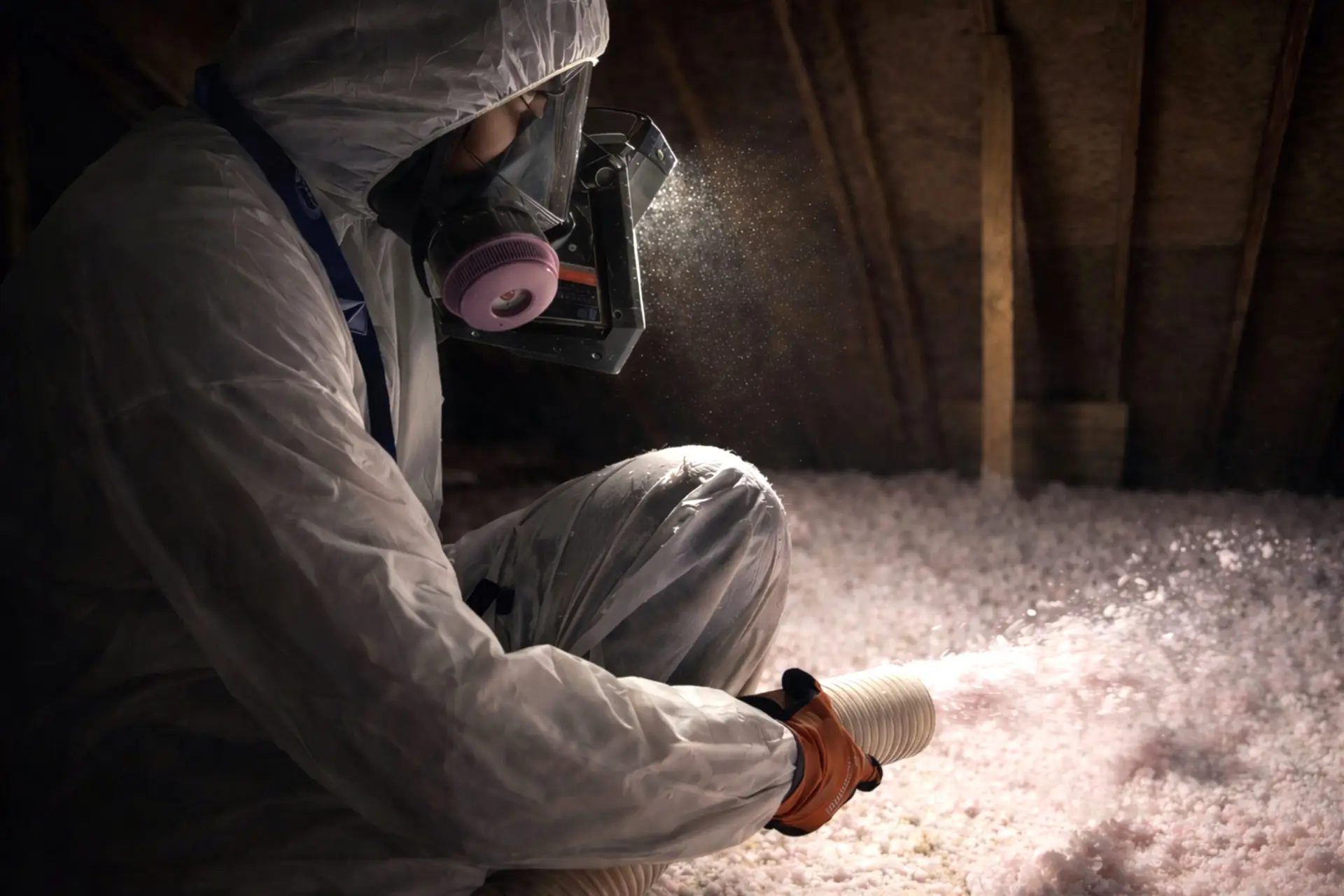
- Remove damaged insulation. Our attic insulation removal service in the GTA clears out wet or contaminated material.
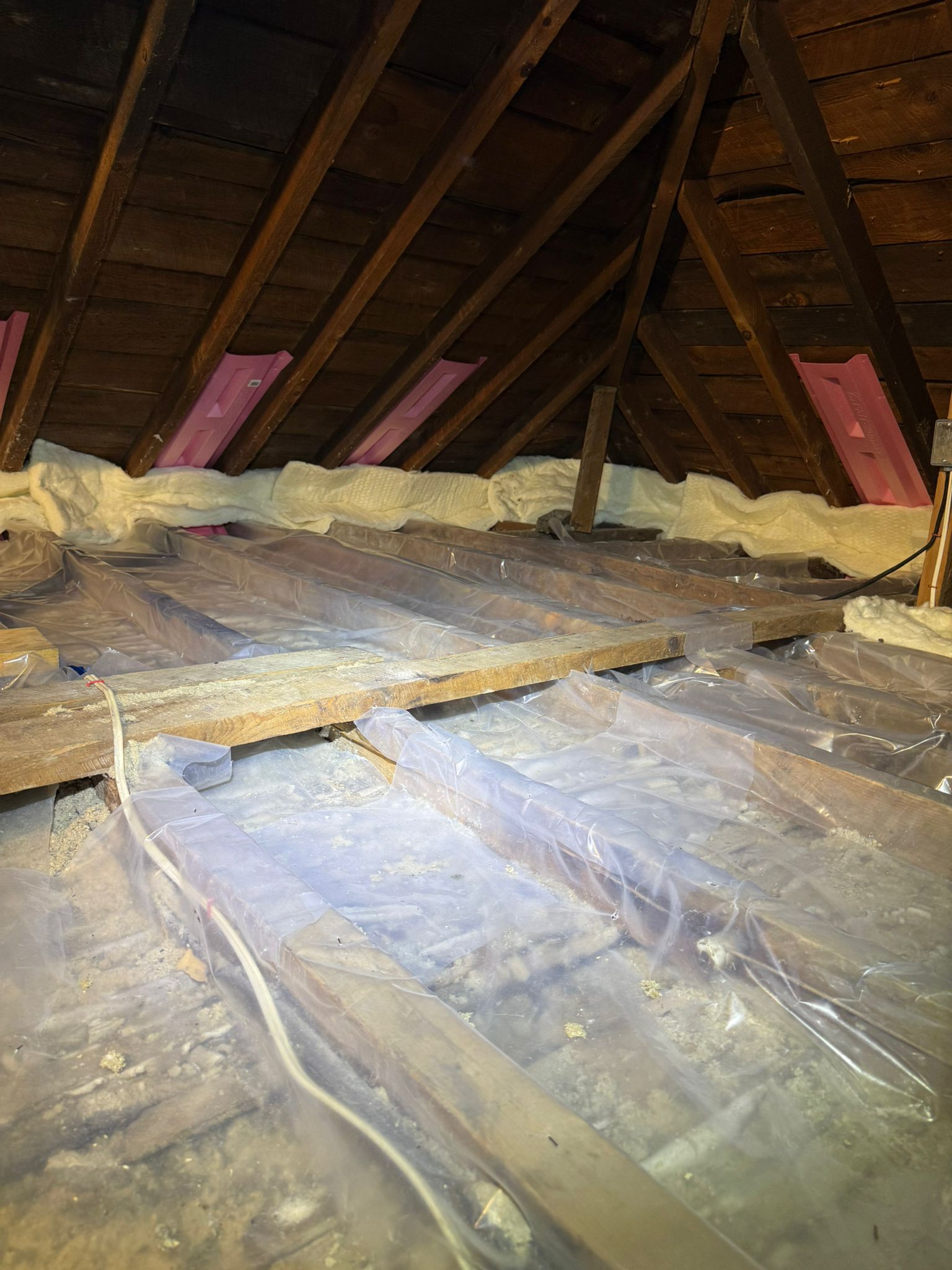
- Clean the wood. Surface mould is cleaned and the wood dried. Rotted sheathing may need a roofer.
- Air seal. Seal ceiling penetrations and the hatch. AeroBarrier air sealing seals hidden leaks across the whole home, which is useful in shallow attics that are hard to reach.
- Ventilate. Install baffles, vent fans outdoors and add a vapour barrier where needed.
- Re-insulate for your home type. Open attics suit cellulose blown-in or fibreglass blown-in insulation. Knee walls, vaulted ceilings and rooms over garages often need 2 lb closed-cell spray foam. See all spray foam insulation options and garage ceiling insulation.
Replace damaged ceilings, and use moisture-resistant drywall in bathrooms.
Prevention for Every GTA Home
- Air seal the attic floor
- Keep soffit-to-roof airflow open
- Vent every fan outdoors
- Insulate to current levels (attic insulation in the GTA)
- Pay attention to your home type’s weak spots
- Inspect in spring and fall
Upgrades may qualify for rebates. See our home renovation rebate page.
Frequently Asked Questions
Which GTA homes are most likely to get attic mould?
Any home can, but shallow attics, knee walls and homes with old insulation or attic-vented fans are at higher risk.
Does the fix depend on my type of home?
Yes. The causes are the same, but the best insulation and sealing approach depends on the attic’s shape and access.
Where in the GTA do you work?
We serve homeowners across the Greater Toronto Area.